
The foundation of technical infrastructure solutions
A raised access floor is a modular flooring system that creates a cavity between the structural concrete slab and the walking surface, providing space for cables, pipes and HVAC distribution. Widely used in offices, data centres and control rooms.
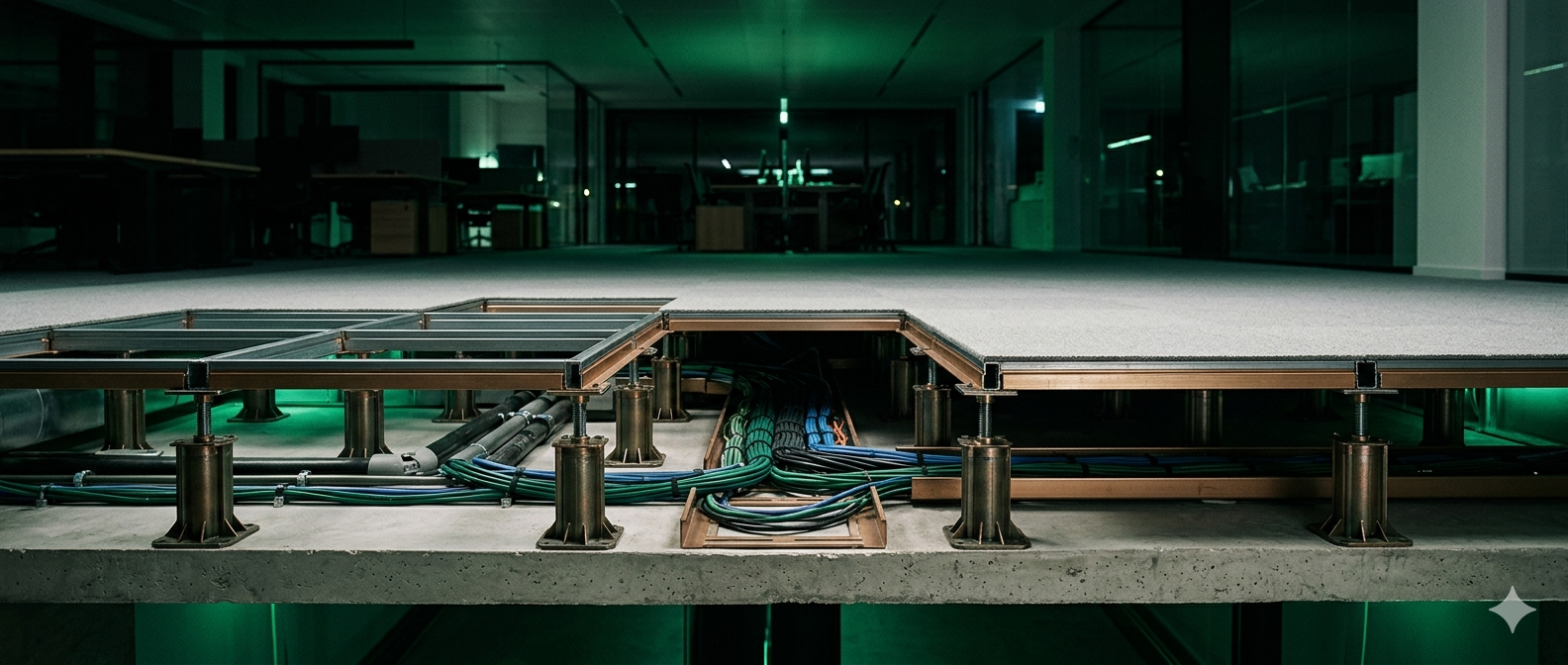
A raised access floor consists of modular panels supported by adjustable pedestals above the structural floor slab, creating an accessible void for technical services. This cavity accommodates electrical cabling, data networks, cooling distribution and HVAC ducts in a clean, managed way.
Standard panels measure 600 × 600 mm and rest on height-adjustable pedestals. The floor void can range from 5 cm to over 100 cm, accommodating everything from slim office installations to high-density data centre floors.
Accessibility is the primary benefit: any panel can be lifted for inspection or cable management without cutting concrete or removing flooring. This significantly reduces long-term maintenance costs.
Air distribution is a critical function. In data centres, cold air is supplied under the raised floor and directed through perforated panels to the front of server racks, improving cooling efficiency.
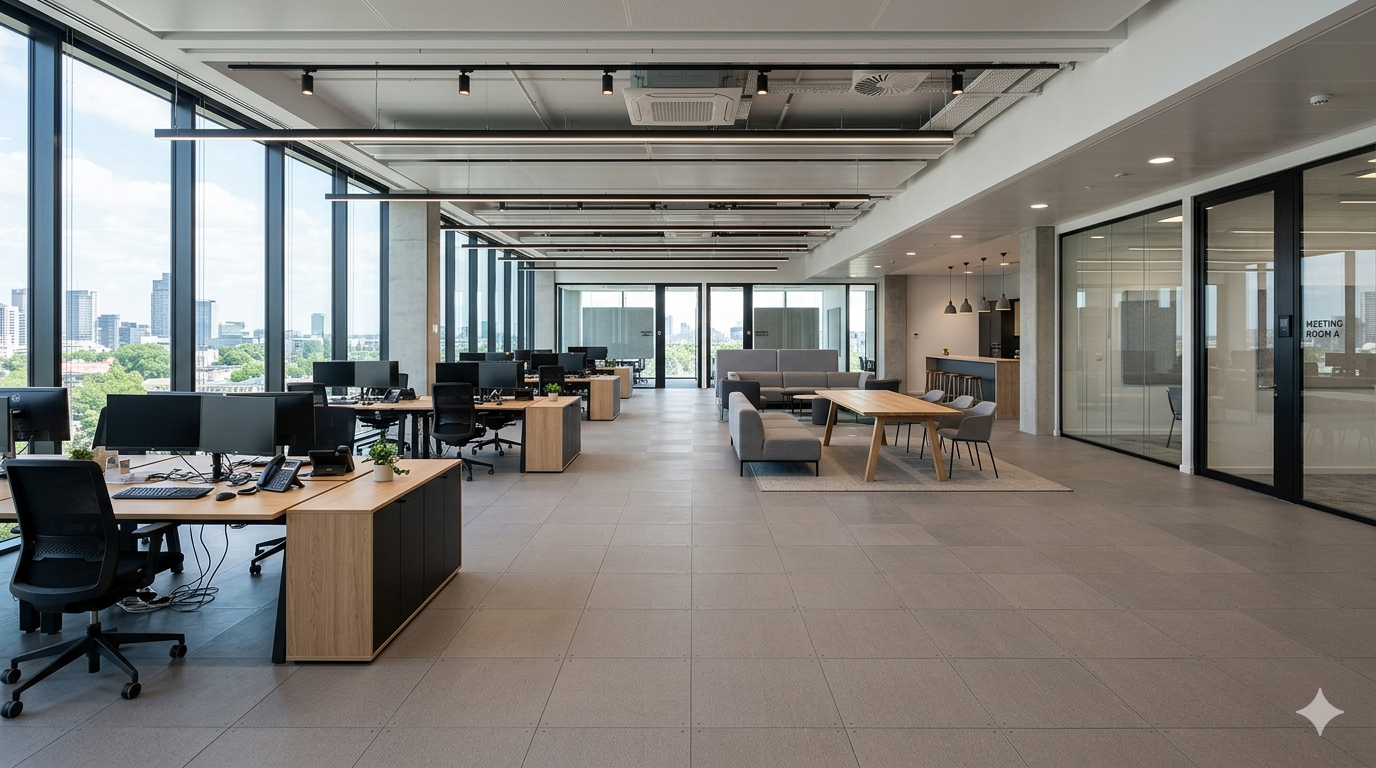
The modular structure allows office layouts to be reconfigured without damaging the floor. Users benefit from lower total cost of ownership compared with fixed trunking or cable trays.
Data centres and server rooms, commercial office spaces, trading floors, control and command centres, computer laboratories and cleanrooms are the primary applications.
Standard panel size is 600 × 600 mm. Working point load capacity starts from 2.81 kN per panel depending on type; solutions from 12 kN and above are available for heavy-duty environments. Surface finishes include high-pressure laminate (HPL), vinyl, carpet tile or bare steel.