
The advantages of modular carpet flooring
Carpet tile is a commercial carpet system produced in square 50 × 50 cm modules rather than broad rolls. Its modular nature integrates seamlessly with access floors; it enables localised replacement and pattern flexibility.
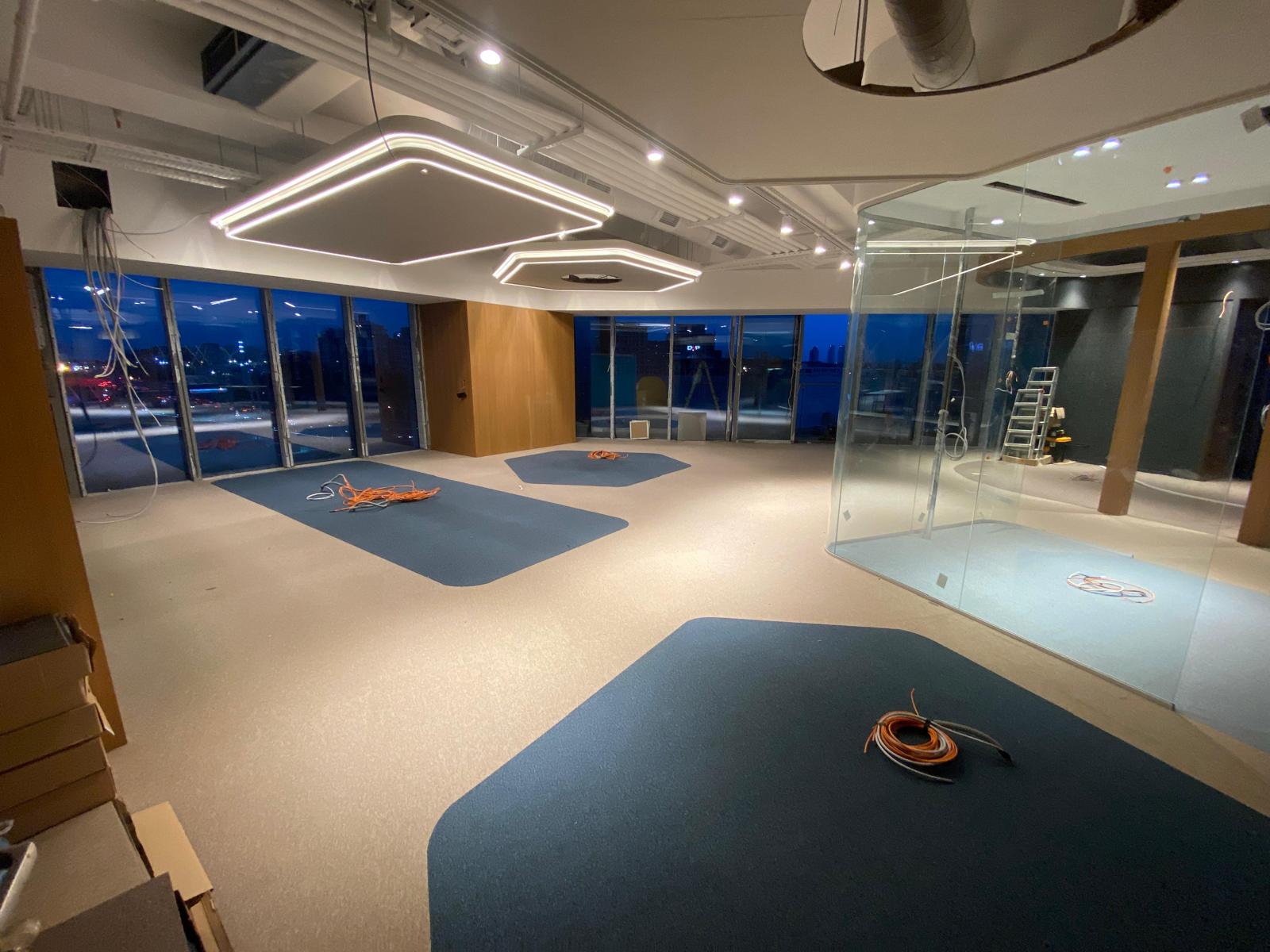
Carpet tile is a commercial flooring system consisting of square modules, typically 50 × 50 cm, rather than broad rolls. A stabiliser backing layer beneath the carpet fibres allows installation by gluing or loose-laying onto flat surfaces.
When used with raised access floors, individual tiles can be lifted without obstructing access to the void beneath. This is particularly valuable in areas requiring cable changes or maintenance.
Localised replacement is the most distinctive benefit: a single worn or stained tile can be replaced without removing the entire floor. This reduces both waste and maintenance cost.
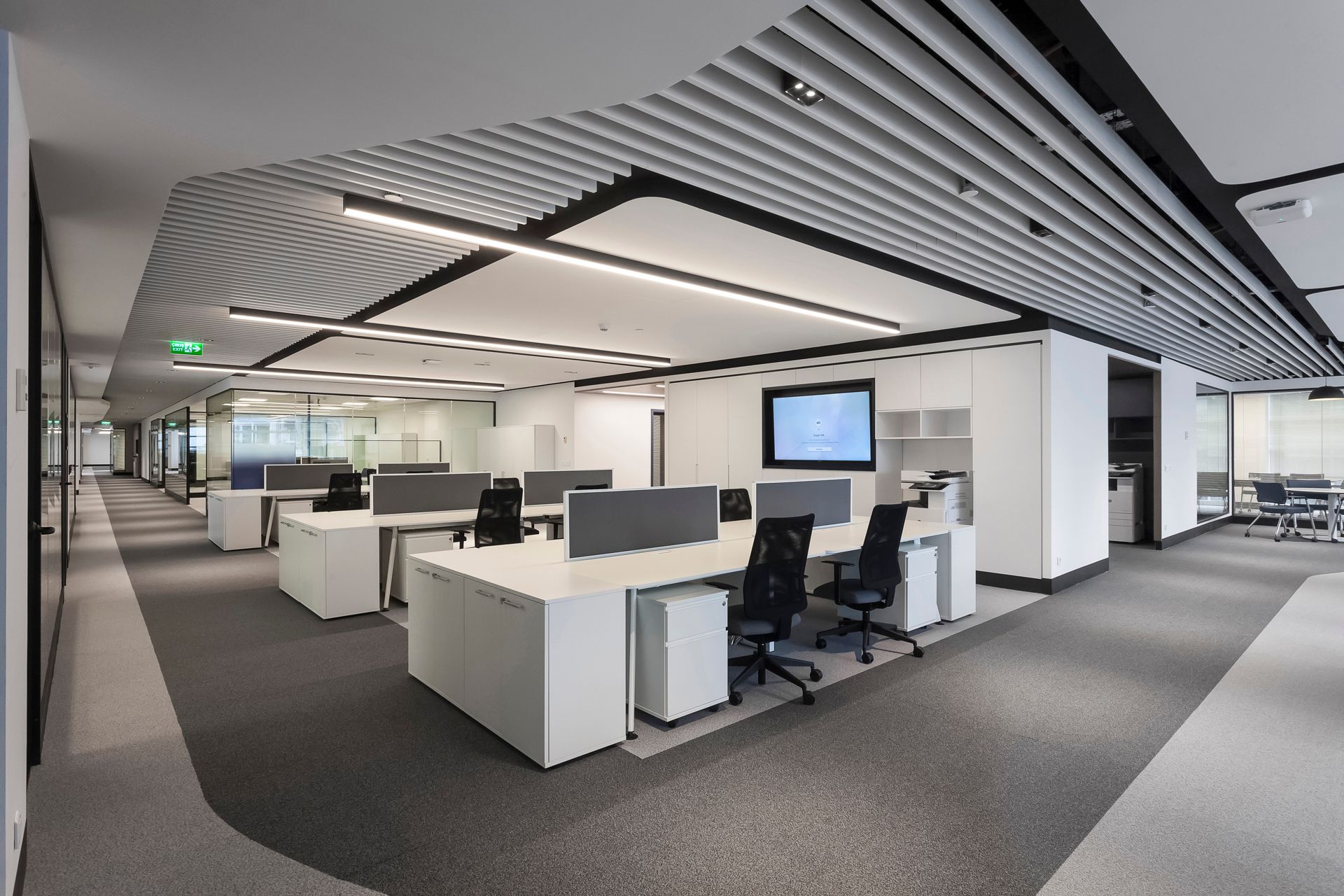
Acoustic comfort is another key advantage. Carpet tile significantly reduces footfall noise compared with hard floor coverings, making it a preferred choice for controlling sound propagation in open-plan offices.
Aesthetic flexibility: combining different colours and patterns visually defines circulation routes, workstations and meeting zones.
Carpet tile has three core layers: face (pile) layer, primary backing and stabiliser backing. Face fibres may be nylon, polyester or wool. Stabiliser backing alternatives include bitumen, vinyl or fibreglass, each offering different dimensional stability and thermal conductivity characteristics.