
From panel material to surface finish — all options explained
The most common raised access floor types: calcium sulphate panels, particleboard core panels, steel panels and concrete-filled panels. Each type has distinct advantages and suitable applications.
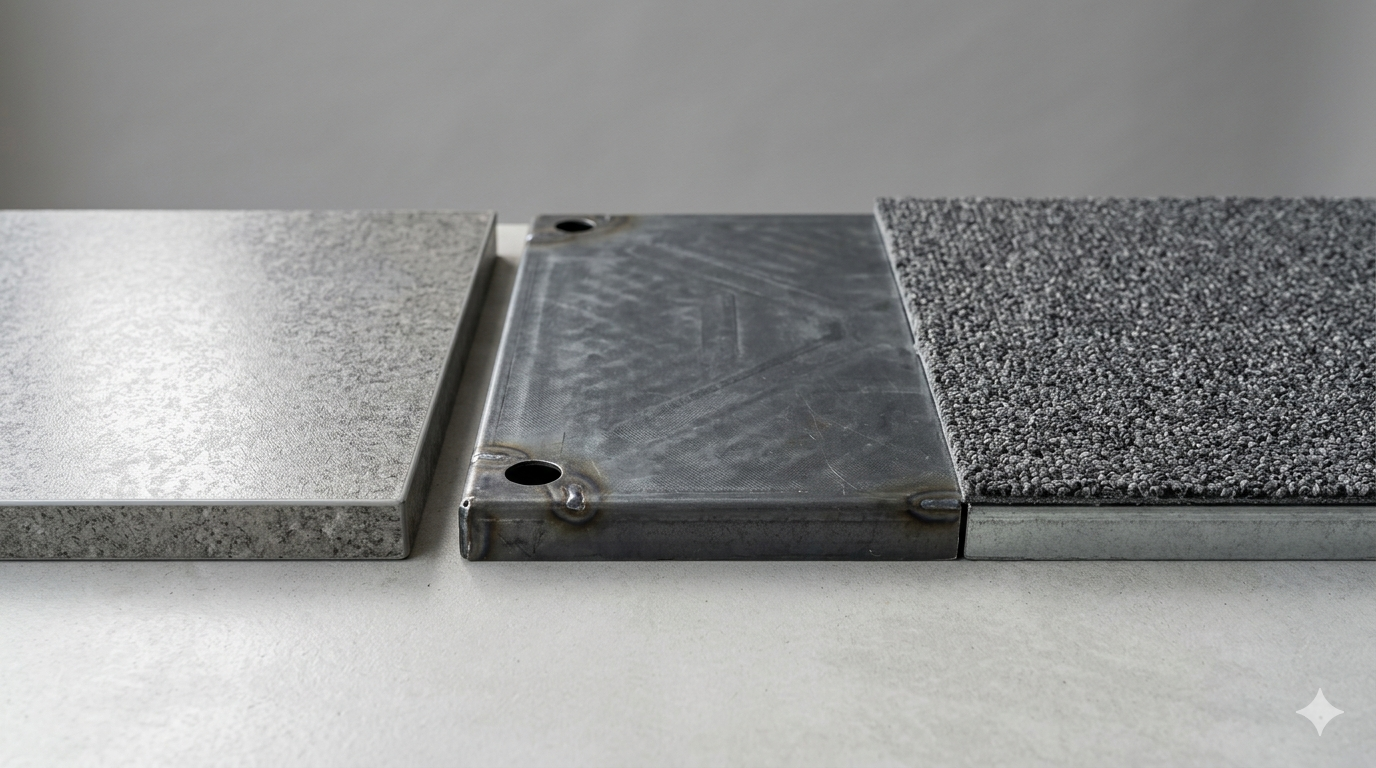
Calcium sulphate panel is the most widely used type in commercial and institutional projects. Its high moisture resistance, fire performance and density of approximately 1.25 g/cm³ make it suitable for environments with humidity exposure. Steel-encased versions are available for higher load requirements.
Particleboard core panels are an economical option designed for standard indoor climate conditions. They are not recommended for high-humidity or high-traffic zones where calcium sulphate panels perform better.
Steel panels are chosen for spaces with limited floor void height or where very high point loads are required. A galvanised steel shell with optional cement infill combines a slim profile with high load capacity.
High-pressure laminate (HPL) is the most common office finish: hard-wearing, easy to clean and aesthetically neutral.
Vinyl (PVC) is preferred in healthcare, laboratories and production areas. Key benefits are hygienic properties and non-slip surface options.
Carpet tile provides acoustic comfort in office environments and improves user experience. The modular format allows individual soiled panels to be replaced.
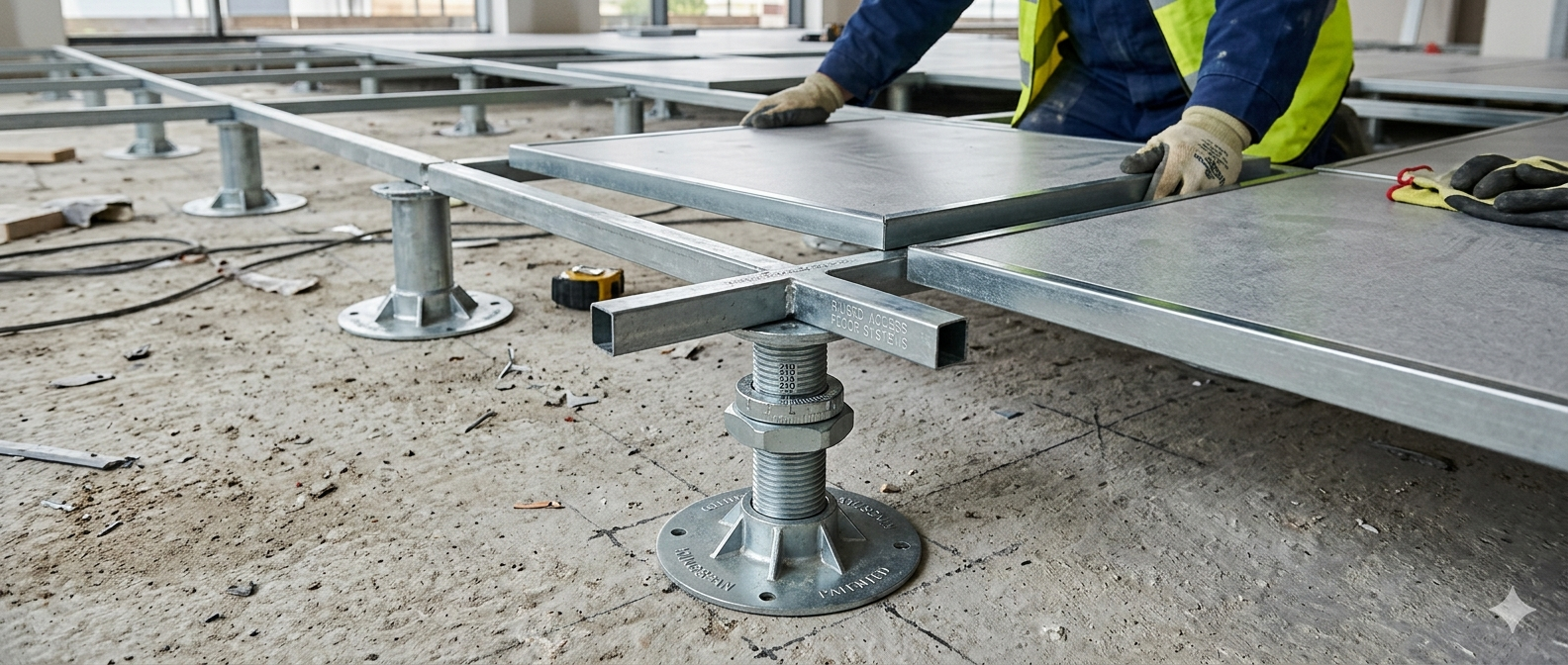
Adjustable steel pedestals form the structural skeleton. Height is set with millimetre precision using a locking screw, enabling a level working surface even on sloping structural slabs. Pedestal heads are available in fixed and swivel variants.